Showing posts with label New York Mets. Show all posts

Friday, June 24, 2016

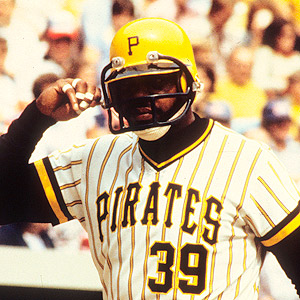
#372 Joel Youngblood


Who is this player, 
Joel Youngblood, outfielder, New York Mets

For the first time in his major league career, Joel Youngblood began 1980 with the aspirations of being a regular. After a breakout 1979 season that saw him emerge as one of the bright spots on a bad New York Mets team, Youngblood was being counted on as the regular right-fielder. In fact, Youngblood said that his greatest thrill as a player came in the 1980 opener when he made a great catch against the Chicago Cubs. Video of that catch is below:


Youngblood would play the majority of 1980 in right field, but his versatility eventually saw him moved all across the diamond; in left field, at third base, in center field and at second base. Even when he did not start, the right-hitter fashioned a .538 average (7 for 13) as a pinch-hitter in 1980. Additionally, his 18 outfield assists ranked third in his league. 

Since there are numerous, well written bios already on the web about Youngblood, I won't rehash. You can find some of the better ones here  and here.

Joel Youngblood, is of course best known for being the only player in Major League history to collect two hits for two teams in two different cities on the same day. This too, has been very well documented. MLB.com has video of the day's events here, and nearly every article written about him since contains a mention of it. 

During his career, Youngblood represented an interesting dichotomy; is it better to be a bit player on a World Championship team, as he was with the 1976 Cincinnati Reds, or an everyday player on one of the worst teams in the league? As it was, Youngblood's ability to do many things well parlayed into a 14-year major league career with the Reds, St. Louis Cardinals, Mets, Montreal Expos and San Francisco Giants. 

Youngblood moved on to coach in the majors with the Reds, Brewers and Orioles and managed in the minor leagues during the 1990s. He left baseball for a while to work in sales and returned to baseball earlier this decade as coach with the Arizona Diamondbacks, where today he is a minor league coordinator. A short interview with him last summer is located below.


Why I love this card
Joel Youngblood was named to the 1981 All Star team, primarily due to the fact that he was leading the NL in batting at the time the Player's Strike hit. One of the things that I did during the broadcast was organize all the cards of the players in the game. The only problem was, I did not have a 1981 Youngblood card. The card above had to do as it was the only one that I had and the fact that he was an All-Star, never mind the reason, he was a cut above. Guys who made the All Star teams during this era, remained a cut above in my mind for years to come by the basis of that. Now I know that they shouldn't have, but that didn't matter at the time.

Something else...
Topps 1983 stickers memorialized the Two Hits in a Day thing with a two-part sticker layout. I hated the Youngblood card, because no matter what, the cut on the stickers had to be off as I could never, I mean ever, get the neck in his jersey to line up perfectly. 


Secondly, this is Youngblood's second appearance on a 1980 Topps Card. His first came on Tim Foli's issue, card #246. Here it is below:


Friday, June 10, 2016

#364 Ray Burris


Who is this player?
Ray Burris, starting pitcher, New York Mets

During a rebuilding period for the New York Mets, right-handed hurler Ray Burris was looked to provide veteran presence to the starting rotation as the 1980 season began. Ray pitched well to start the year, fashioning an ERA under 3.00 as spring turned into summer. Despite this, he had just a .500 W-L record on the morning of July 3, when he started a game against the Montreal Expos. In the second inning, he was trying to bunt Alex Trevino to third when the pitched from Charlie Lea hit him in the hand and broke his thumb. He spent a month on the disabled list and returned in dramatic fashion, defeating division front-runners Montreal and Pittsburgh Pirates in back-to-back starts. Burris lost his last six starts of the season unfortunately, but still led the team in starts and innings pitched.

Like many players of his era, Oklahoma native Ray Burris was a high school star at Duke High School and played semi-pro ball for the Lawton Oklahoma Pepsis. He helped lead his team to the 1970-71 championship and was named all-state both seasons. He enrolled at Southwestern Oklahoma State University, where he played basketball, earned four varsity letters on he diamond, and received a Bachelor of Arts degree in Recreational Leadership. He still holds most school career pitching records and in 1972 he set a NAIA record with 150 strikeouts in a season. His performance drew attention for the major leagues and the Cubs selected him in the 17th round of the 1972 free agent draft.

He ascended quickly in the minor leagues, and was invited to Spring Training by the Cubs in 1973. He made the staff as a relief pitcher but split times between the Chicago and the minor leagues his first two seasons. He was inserted into the starting rotation in 1975 and spent the next four seasons taking a regular turn on the hill for the Cubs. Highlights of Ray's tenure as a Cub include turning a 3-11 start in 1976 to go 12-2 the rest of the way to finish with a winning record and exceptional ERA. Ray was also on the mound at Shea Stadium the night of the 1977 New York blackout in July and Burris earned the complete game win two months later when the game was resumed.

When the 1979 season started slowly, Ray was shipped to the New York Yankees, where he only pitched in 14 games before being dealt again this time across town to the Mets. A free agent after the 1980 season Ray left New York for the Montreal Expos, who were looking for more pitching after they failed to land Don Sutton. Ray pitched very well in the strike-shortened '81 season, helping lead the Expos to their first and only post-season appearance. If not for Rick Monday, Ray would likely have been named MVP of the NLCS, besting rookie sensation Fernando Valenzuela with a complete game shutout over the Dodgers in Game Two and allowed only one run over eight innings in Game 5 before giving way to Steve Rogers and the impending Monday heroics.

Burris never pitched that well in Montreal again and was traded to he Oakland A's after the 1983 season. Rejuvenated by a change in scenery, Ray was the A's most reliable starting pitcher in 1984, leading the club in victories, innings, complete games and shutouts, while fashioning the best ERA of all Oakland starting pitchers. Despite this output he was traded to the Milwaukee Brewers for Don Sutton. He had a disappointing season in 1985, finishing with a losing record in his final season as a starting pitcher. Ray pitched for the Cardinals and Brewers his final two seasons, ending his 15 year career after the 1987 season.

After his playing days, Ray turned to the coaching ranks for several different teams and organizations, most recently in the Philadelphia Phillies chain with the Lehigh Valley Iron Pigs. He was considered a strong candidate to be the Phillies pitching coach under manager former Ryne Sandberg.

Why I love this card
Bertram Ray Burris. There was something magical about a player's full name. When I was a kid, whenever my full name was spoken, it usually meant that I was in trouble. To see a players full name spelled out in a similar fashion reminded me that they were human too. It gave them personality and commanded intrigue. A simple yet effective way to pull a young kid into the world of baseball and collecting.

Something else.....
One has to wonder when looking at a player like Ray Burris. With the exception of his three seasons in Montreal, Ray's entire career was with losing clubs. Particularly his time with the Cubs and Mets, what if a pitcher of Burris' talents was with say the Pirates and the Dodgers. I'm not suggesting that Burris would he a Hall of Fame candidate, but it is just one of those "what ifs" that are scattered across the history of this great game.

Saturday, May 12, 2012

#353 Andy Hassler


Who is this player?
Andy Hassler, relief pitcher, New York Mets
When Spring Training began in February 1980, it was presumed that free agent signee Andy Hassler would replace the departed Bruce Kison on the world champion Pittsburgh Pirates' pitching staff. However, a terrible performance the Grapefruit League shook the confidence of Pirate management. He performance, along the with acquisition of Buddy Solomon, likely would have led to his release if not for his large contract. Hassler appeared in only six games for the Pirates before he was sold to the California Angels in mid-June. Back in Anaheim for the second time in his career, the left-handed Hassler became the Halos most reliable relief pitcher and eventual closer. He saved 10 games and recorded a 2.49 ERA in an Angels uniform and re-established himself as an effective reliever.

A prep star at Palo Verde High School in Tuscon, Arizona, Andy Hassler once struck out 19 of 21 batters in a game and made the All-City team in his senior year of 1969. Shortly after graduation he was drafted by the California Angels, and less than two years later, he made his major league debut at Yankee Stadium. At 19 years old, Hassler was (and is) the youngest pitcher ever to start a game at the venerable ballpark.  Hassler lasted a month on the Angels in 1971 before he was sent back to the bushes for more seasoning.

The Angels were very high on Hassler, and he was the staff ace at Triple-A Salt Lake City. As the Angels added Nolan Ryan and Frank Tanana to their major league roster, the Angels envisioned a dominant rotation that included Hassler that would lead them for the remainder of the decade. Despite such promise, however, Hassler was unable to reach the same level of success as his All-Star teammates. Whether it was mechanical issues, poor run support or just bad luck, Hassler won only 10 of 30 decisions in his first five seasons in an Angel uniform and at one point lost eighteen decisions in a row.

Sold to the Kansas City Royals in June, 1976, Hassler's arrival in Kaycee coincided with a Royals run that saw them win three consecutive AL West flags. With renewed confidence and the help of a hypnotist, Andy solidified that back end of the Royals' rotation. In the postseason, the Royals and Hassler struggled as they were turned back by the New York Yankees. Despite his success in Kansas City, a freak injury sidelined him early in the 1978 season when he cut his hand reaching for suitcase (he instead grabbed a knife). When Rich Gale did well in his absences, Hassler was sold again in 1978, this time to the Boston Red Sox.

Hassler finished the 1978 season with Boston pitching mostly out of the bullpen. When he started poorly in 1979, Andy was sold a third time, to the New York Mets. With the pitching-poor Mets, Hassler pitched well, alternately as a starter and reliever. After the season, he signed a free agent contract, rumored to be $750K with the Pittsburgh Pirates

Back with the Angels from 1980-1983, Hassler was now pitching exclusively in relief. He was typically used as a left-handed setup man, during a time before that role was defined as it is today. Andy had an exception 1982 campaign as the Angels won the 1982 AL West title. Appearing in 54 games he won two, saved four and marked an impressive 2.78 ERA. The season ended on a sour note when the Angles lost the ALCS to Milwaukee and there was a minor controversy as to why manager Gene Mauch failed to use Hassler in the deciding game. After this, and an unimpressive performance the following season (0-5 5.45) Andy released. He latched on to the St. Louis Cardinals, where he spent the final two seasons of his 14-year major league career.

Today, Hassler is living in Arizona, enjoying his retirement. He dabbled in real estate after his playing days and is known to reply to his fan mail.

Why I love this card
I was a naive kid in 1980. I knew absolutely nothing about Topps' airbrushing policy and how or why they did it. But I knew it when I saw it and it leaped out at me on Hassler's card. There was just something about his Mets hat that just didn't look right. Looking back now, however, I just can't believe that Topps would waste their time airbrushing when Hassler was in a Mets' uniform for the whole second half of the 1979 season. I mean, they sent someone out to take a picture of Dock Ellis in a Mets uniform, who came on board roughly the same time. Couldn't they have taken the time to find Hassler and snap a photo?

Something else....
Hassler holds an unofficial record for players in the modern era, sold four times. You just don't see that happen today, let alone four times to one player.

Tuesday, July 5, 2011

#331 Richie Hebner


Who is this player?
Richie Hebner, third baseman, New York Mets
For the first time in his career, Richie Hebner would be playing in a new league in 1980. Traded to the Detroit Tigers in November, 1979, he was slated to be the Tigers' cleanup hitter and third baseman. Hebner shifted to first after the trade of Jason Thompson and responded with an All-Star worthy first half, among the league leaders in RBI. An aggravated knee injury cut into his production in the second half, where he spent most of the final month of the season in a pinch-hit capacity. Nonetheless, he finished the year with a solid .290 batting average and respectable 82 RBI (a career high) in 104 games.

The Grave Digger. Today, the native of Walpole, Massachusetts is best known for his off-season training regimen that saw him working as a gravedigger at a cemetery run by his father at a time when major league ballplayers often held other jobs, earning $35 a grave. But it was his athletic ability that drew interest not only from baseball scouts, but hockey ones as well. Hebner was one of the top scholastic hockey players in the country and he was offered a contract by both the Boston Bruins and Detroit Red Wings. When the Pittsburgh Pirates drafted him on the first round in 1966 and signed him for $40,000, Hebner days on the rink were over.

Within two seasons, Hebner was in the major leagues, coinciding with the Pirates dominance of the NL East in the early part of the 1970s. Hebner was a integral performer on the Bucs as their starting third basemen and particularly elevated his game in the post season. He hit a game-winning home run off of Juan Marichal in Game 3 of the 1971 NLCS and helped lead the Pirates to a World Championship. He would leave Pittsburgh after nine seasons as a free agent to sign with the Philadelphia Phillies in 1977. Hebner would switch to first base and be part of two division-winning teams in Philly. In all, Hebner would play for seven division champions during the 1970s.

When Pete Rose arrived on the scene, Hebner was off to New York, traded to the Mets. Hebner was unhappy in New York and was traded again to Detroit, where he spent three seasons as a first baseman/DH. The Tigers sold Richie to the Pirates midway through 1983, where Hebner began the transition into being a part-time player. While he had some notable contributions, he was counted on to provide a big hit off the bench. He signed on as a free agent with the Chicago Cubs prior to the 1984 season, where he made one final postseason appearance. Richie's 18-year career came to an end when he was cut in Spring Training, 1986.

Hebner began a second career in baseball by becoming a manager and coach. He was hired by the Toronto Blue Jays in 1988 to become a manager in the minors. When his good friend Joe Morgan took over as manager of the Boston Red Sox, Hebner was installed as hitting coach for three seasons. He returned to the Blue Jays organization to manage a Triple-A Syracuse and was a coach for the Philadelphia Phillies in 2001. Most recently, he managed the Frederick Keys in the Baltimore Orioles system and was on the Norfolk Tides coaching staff in 2010.

Why I love this card
This card is what this blog is all about for me. Every boy has a favorite player and in 1980, without question, Hebner was mine. Here's why. Hebner was a new Tiger with Pittsburgh roots. My Dad was a transplanted Pittsburgher, I can imagine when he saw this ad in the Spring of 1980, it peaked his interest.


So my Dad took me and to meet my first major leaguer. It was a significant moment in my young life, because things like this didn't happen all the time. Hebner was very nice and asked me about my Pirate hat. I asked him about Roberto Clemente and Willie Stargell. He signed my autograph book and gave me every indication that this is what a professional ball player looked and sounded like. I can't recall how many times I looked at this card during that summer and thought of this day.

Here was a photo from that momentous occasion, yours truly with Mr. Hebner (note the Pirate hat and Tigers jacket)


Something else....
No post about Hebner would be worth its salt without a mention of his batting stance. Every time he would step in, he would reach around and tug on the back of his collar. Every time. It would be one of those things we would mimic, like Carew's crouch or Stargell's bat twirl. There is a small video of it here, but not until the 7:55 mark.

Finally, since Hebner was traded early in the off-season, Topps OPC was able to amend his card to mention he was now on the Tigers. What I would have given to have this card in 1980.

Friday, June 11, 2010

#299 Steve Henderson


Who is this player?
Steve Henderson, left fielder, New York Mets
The year 1980 began painfully for the Mets' Steve Henderson, as he injured his shoulder in January playing winter ball in Puerto Rico. He healed up in time for Spring Training and was ready to go by Opening Day. Henderson got off to a great start, putting together 14 multi-hit games by Memorial Day. By early June, he had a 13-game hitting streak and was leading the National League in batting. He tailed off as the season wore on, but he still hit a strong .290, leading the team and show the promise predicted for him when he was traded for Tom Seaver in 1977.

The pride of Prairie View A&M, the righthanded hitting Henderson was selected by the Cincinnati Reds in 1974. Henderson rapidly became one of the prize prospects in the Reds system after leading the 1975 Eastern League with 158 hits, 11 triples and 255 total bases. The following year, he batted .312 at Double-A and improved upon that when he was batting .326 for the Triple-A Indianapolis Indians in 1977. It was in June that he was part of a multi-player package in the Seaver deal, and Henderson was considered the prize of the group.

Thrust into the Mets' lineup, Henderson paid immediate dividends. He hit a dramatic game-winning home run in the 11th inning to defeat the Atlanta Braves in just his fourth major league game. For the season, Henderson had a .297 batting average in 99 games with twelve home runs and 65 RBI. He narrowly finished second to Andre Dawson of the Montreal Expos in NL Rookie of the Year balloting and was considered a coming star.

Nicknamed "Stevie Wonder," Henderson began the 1978 season quickly, homering three times in the first five games. Typically batting third, he played in a career-high 157 games and Steve batted .306 in 1979. His season was cut short by an ankle injury that saw him miss nearly two months of action. When the Mets changed owners in 1980, they began to make moves to appease their fan base. On February 28, 1981, the Mets sent Henderson and cash to the Chicago Cubs in order to re-acquire fan favorite Dave Kingman. Steve spent two seasons with the Cubs and it began to become clear that while Henderson was a good hitter with an excellent eye, his lack of power ultimately cost him playing time.

Henderson was traded to Seattle for the 1983 season and it was the last time he played as a regular. He bounced from Seattle to Oakland and to Houston as a part-time player before ending his 12-year career in 1988. He became a player-coach with the Pittsburgh Pirates' affiliate Buffalo Bisons in 1990 and remained a coach in the system for three more years before becoming a Houston Astros coach for three seasons (1994-1996). Henderson joined the expansion Tampa Bay Devil Rays organization and spent 8 years as the minor league hitting coordinator (1997 and 1999-2005). He was the Rays hitting coach in 1998 and returned to that position in 2006.

Why I love this card
This is just a great card. Maybe it's the pose. Maybe it's the bold royal blue throughout. Or maybe it's that when this set first came out, Steve was the most famous Henderson in the 1980 set. Of course, by the fall, Rickey had something to say about that, but for a moment at least, Steve's promise is captured in this card in the bright afternoon sunlight.

Something else....
Steve was the scapegoat in the Rays' disappointing 2009 season when Tampa failed to return to the postseason and defend their AL Championship. He was fired after the season ended, following a season in which the Rays set team records for runs, home runs, on-base percentage and walks. Many of the current Rays stars, such as Evan Longoria and B.J. Upton have credited Henderson's tutelage as instrumental to their success.

On this date in 1980:
Henderson goes 0-4 with a run scored as the Mets defeated the Los Angeles Dodgers 6-2 at Shea. The Mets were in the midst of playing improved ball excited their fans and moved them into fourth place in the NL East. It would be short-lived, however, as the Mets lost 95 games and finished 24 games behind the World Champion Phillies.

Saturday, March 20, 2010

#259 Joe Torre New York Mets Team Card


What is this card?
Team Card, New York Mets, Joe Torre Manager

Current Los Angeles Dodger manager Joe Torre was beginning his fourth season as Mets' skipper. Hard to imagine that when this card came out that Torre would compile a Hall of Fame resume as manager, famously of the New York Yankees. He also led the Atlanta Braves and Dodgers to postseason appearances.

A year after posting the worst record in the National League, the New York Mets were sold on January 24, 1980 for an estimated $22 million (the largest amount ever paid for a ball club to that point). Shortly thereafter, longtime Baltimore Orioles' GM Frank Cashen was hired to run Mets. Rarely can a team that lost 95 games claim it was a successful season, but the Mets did improve in 1980. They moved up a place in the standings to fifth and drew nearly 600,000 more fans than the previous year. They hovered around .500 for most of the season until a free fall saw them lose 38 of their last 49 games.

There were several young players that led the Mets, most notably homegrown Lee Mazzilli. He was complimented by Gold Glove winner Doug Flynn, the promising Steve Henderson and All-Star John Stearns. On the mound, Craig Swan, Pat Zachary and Neil Allen held the most promise.

Several youngsters also made their debut in 1980, such as Hubie Brooks, Wally Backman and Mookie Wilson. Backman and Wilson would be important members of the 1986 World Champions. Future Cy Young winner Mike Scott and All-Star closer Jeff Reardon were also Mets in 1980, in the early stages of their careers.

However, the most important Met in 1980 would be their selection in the June amateur draft. With the #1 selection overall, the Mets chose a 18-year old outfielder from Los Angeles, Darryl Strawberry. Almost immediately, Strawberry would begin to evoke comparisons to Ted Williams and he would have a significant impact on the Mets' fortune as the decade wore on.

Why I love this card
Other than the fact that I haven't upgraded this card in 30 years, the white background here confused me. Much like the Chicago White Sox team card, there is a completely white background here. I can't imagine where this photo would have been taken, because I can't imagine an angle at Shea Stadium that would account for this. Must have been Spring Training, I guess.

Something else....
Here is a Kiner's Korner from 1980.

On this date in 1980:
Bob Hope appears on the cover of Rolling Stone. Also in this issue is a in depth look at George Bush, the man who would become Vice President in 1980 and the eventual 41st President of the United States. He was still seeking the Republican nomination for President at this stage in 1980.

Wednesday, November 11, 2009

#189 Kevin Kobel


Who is this player?
Kevin Kobel, relief pitcher, New York Mets
When the 1980 season opened, Kevin Kobel had earned a spot in the New York Mets' bullpen after being "on the bubble" during Spring Training. He walked three of the eight batters he faced in his first outing and things didn't improve for him. After four appearances, Kobel's ERA swelled to 9.00. He continued to struggle and was used infrequently. In June, he was traded to the Kansas City Royals and Kobel spent the remainder of 1980 at Triple-A Omaha. It would prove to be the last of six major league campaigns for Kobel.

Originally from Buffalo, New York, the lefthanded Kobel was drafted by the Milwaukee Brewers shortly after his high school graduation in 1971. He earned a brief look by the parent club in late-1973 but was unimpressive in two games against division rivals Boston and New York. The following season, however, Kobel earned a spot in the Milwaukee rotation. Although he was 6-14, he achieved career bests in innings pitched, shutouts and complete games. A highlight came on May 27th when he out dueled future Hall of Famer Nolan Ryan.

Kobel developed arm trouble in 1975, pitching only four innings over the next three seasons, missing the entire '75 and 1977 campaigns. Uncertain that he could return to the majors, Milwaukee sold him to the New York Mets in December of 1977. Determination and hard work earned him a spot on the pitching staff and Kobel responded with an outstanding effort in 1978. In 32 games, he posted a 2.91 ERA with five victories.

He resumed a similar role with the Mets in 1979 but injuries pushed Kobel into New York's starting rotation. He had three starts go into the eighth inning without allowing a run, but only earned one victory. In June, he threw a three hit shutout against Atlanta, but was primarily a .500 pitcher the remainder of the way. His ledger at the end of the year was a 6-8 record with a 3.54 ERA.

Kobel pitched in the minor leagues through 1982 before retiring for good. In retirement, he moved to Arizona and became an active member of the Arizona Major League Alumni Association which travels the state giving lecture and instruction to Little League and high school players.

Why I love this card
Sunday, August 24, 1980. My grandpa had been sick for some time and died that day. I had just bought a pack at the 7-11 and was sitting on the curb with some buddies and this card was inside. My dad and uncle came around the corner in my dad's huge 1978 Buick and gave me the "better get home" look. There are a handful of cards from this pack that I associate with that day and Kobel is one. Sorry to be so morbid, but Kevin Kobel reminds me of Grandpa today.

Something else....
Nice to see a break from the head shots that have been on a roll lately, but Kobel looks like he is at a tennis court. And is that guy in the background with his back to the camera taking a leak? On the other hand, never mind.

Friday, October 23, 2009

#172 Ron Hodges


Who is this player?
Ron Hodges, reserve catcher, New York Mets
As the third string receiver on a Mets team that lost 95 games in 1980, Hodges started only nine games and batted only .238 in 54 at bats. He was known primarily for his defensive prowess and often times served as a late inning replacement. His pinch-hit RBI single against the defending World Champion Pirates in June won an 11-inning thriller at Shea in a season highlight. A separated shoulder suffered in early July prematurely ended 1980 for Ron and he spent the remainder of the season on the disabled list.

Mostly a backup throughout his 12-year major league career, the lefthand hitting Hodges was drafted by the Mets in 1972 out of Appalachian State University. Hodges was called up quickly in June 1973, when Jerry Grote, Duffy Dyer & Jerry May all went down with injuries. He established himself quickly with the pitching staff and contributed to the Mets' stretch drive to the NL East title. He made the 1973 postseason roster and pinch hit in Game 1 of the Series, drawing a walk in his only appearance.

Hodges averaged 56 appearances a season with the Mets and was a backup to a string of Mets catchers, from Jerry Grote to John Stearns to Alex Trevino. He batted a career high .265 in 1977 and began to receive more playing time as his career reached its later stages. In 1983, he was finally rewarded with the Mets full-time starting catching position, appearing in 110 games. He started on Opening Day and hit .260 for the season but returned to bench duty in 1984, his final season in the majors.

In 1981, Hodges was involved in two bizarre incidents. First, he fractured the rib of teammate Craig Swan when he hit Swan with a throw trying to throw out Tim Raines. Later that year, he was suspended by Mets' manager Joe Torre when he refused to leave a Montreal bar.

Today, Hodges sells real estate in his native Rocky Mount, Virginia.

Why I love this card
On the cartoon on the back of this card, Hodges is depicted as reading the newspaper in his catching mask. In my nine year old mind, I could totally picture a major league catcher sitting around reading the newspaper, watching TV or having his morning cereal with his mask on. Completely plausible and I laugh at the memory now.

Something else....
Hodges was the only bridge between the "You Gotta Believe" Mets and the eventual World Champions of 1986. His career began with Tom Seaver and Willie Mays as teammates before dipping to five last place finishes and seven 90+ loss seasons. In his final year, his teammates were Dwight Gooden and Darryl Strawberry.

Thursday, September 24, 2009

#151 Tom Hausman


Who is this player?
Tom Hausman, relief pitcher, New York Mets
Pitching primarily out of the bullpen in 1980, Hausman appeared in a career high 55 games, winning six with a 3.98 ERA. Used in a variety of relief roles, the righthander was most often used as a setup man to closer Neil Allen. A season highlight came in July when he struck out a career high seven batters in a rare spot start against the Astros. Hausman made national headlines in August when he gave up Pete Rose's 3,500th career hit.

Hailing from South Dakota, Hausman was an All-State basketball player in high school and was signed by the Milwaukee Brewers as an 18-year old in 1971. After a mixed minor league career, Hausman made the Brewers major league pitching staff in 1975. He began pitching out of the bullpen and earned a spot in the rotation in the second half of the season. His season was limited to a back injury and his future at the major league level was uncertain. Indeed, Tom only appeared in three early season games with Milwaukee in 1976 before being farmed out for the season at Triple-A Spokane.

Hausman spent the entire 1977 season in Spokane as a starting pitcher winning 13 games but was not promoted to the Brewers roster. At the end of the season, he was declared a free agent and on November 21, 1977 became the first ever free agent signed by the New York Mets. He split the 1978 season between the Big Apple and Triple-A Tidewater. He appeared in ten games for the Mets (all starting assignments) splitting six decisions and finishing with a 4.70 ERA. 1979 similarly began in the bushes while also suffering an ulcer problem. Tom was called up to the Mets for good in June. He performed very effectively as a swingman for a pitching-poor Mets team that lost 99 games in '79.

After his breakout 1980 season, Hausman was slowed by an elbow injury in 1981, and made only 20 relief appearances for the Mets. In his limited work, he posted an excellent 2.18 ERA and walked only seven batters in 33 innings of work. The injuries persisted in 1982 as his elbow injury was also compounded by shoulder problems. He was traded to the Atlanta Braves for the Braves NL West stretch drive, but appeared in only three games. It would be the last season in his seven-year major league career.

Hausman was signed by the Pirates for the 1983 season but spent the entire season in the minor leagues. After missing the 1984 season, he attempted a short-lived minor league comeback in 1985 before finally calling it quits. Today, he has residences in Las Vegas as well as his native South Dakota.

Why I love this card
Over time, I have come to appreciate the simplicity of these Spring Training shots. As a kid, I gravitated more towards the action shots of this set, but photos such as Hausman's connect on a more subliminal level. Yes, here is a major leaguer in a major league uniform but he appears to be at a diamond in a park anywhere in the country. It could be yours. The line between reality and fantasy is blurred and that's what its all about when you're nine. Or 38 and collecting cards again.

Something else....
What the heck is in Hausman's back pocket? There is obviously something blue behind him and I can't quite make it out. Batting gloves? Stirrups? A kerchief? OK, I just wanted to work in "kerchief" somehow.

Thursday, August 13, 2009

#117 Dock Ellis


Who is this player?
Dock Ellis, starting pitcher, New York Mets
By the time this card was in my hands during the spring of 1980, Dock Ellis' colorful 12-year career was at its end. He began the 1979 season with the Texas Rangers, was traded to the New York Mets in June and sold to the Pittsburgh Pirates in mid-September. It was not a successful season for Dock, as he won only 4, lost 12 and posted an astronomical 5.84 ERA in his three stops. He was, however, able to finish his career as a Pittsburgh Pirate, a small contributor to the Fam-A-Lee that won the World Series.

Drafted as an amateur free agent by the Pittsburgh Pirates in 1964, Dock Ellis was part of a great influx of great young Pirate talent that would lead the Pirates throughout the 1970s. The strong right-hander became part of the Pirates starting rotation in 1969 and in 1970, famously pitched a no-hitter while under the influence of LSD. To hear the call of that game, as well as Dock's reflection's on it, click here. To commemorate the 35th anniversary of the no-hitter, the Dallas News printed an excellent biography on Dock. Rather than have me fumble through, click here for a great read.

A quote from Dave Parker in that article sums up the kind of player Dock Ellis was:
Dock Ellis was without question the most intimidating pitcher of his era. "Bob Gibson is up there, too, obviously, but with Dock it wasn't just his stuff. It was his flamboyance, his perceived militancy and his fearlessness. When he came and said he was gonna hit all those Reds, I thought, 'You ain't gonna do nothing, man.' Then he did it. I gained a lot of respect for him right there. Dock was and is one of my best friends--I call him my baseball father--but after he left the Pirates, he said he was gonna hit me in the face. And every time I faced him, I was scared."
Parker, of course, was referring to a game when the Cincinnati Reds taunted the Pirates after beating them in the 1972 National League Championship Series. Ellis decided to motivate his team by hitting every single batter in the Reds' lineup. He hit the first three and walked two (although his intent was clear) before he was pulled.

Ellis pitched in the postseason five times in his career and in two World Series. He was part of the 1971 World Champion Pirates when he won a career high 19 games and started the All-Star Game for the National League. Many times throughout his career he was tagged with the label when he spoke out against racism or would make a point on something he believed in. Case in point: when baseball brass complained about his haircut, he wore hair curlers on the field. It would underscore what kind of man Dock Ellis was. He died on December 19, 2008 at the age of 63 following a liver aliment. Meanwhile, his daughter has posted a tribute video on Youtube that can be seen here.

Why I love this card
Whenever I think of Reggie Jackson's famous 1971 All Star home run I think of Dock Ellis. To me they are inseperable. What I didn't know was that when Ellis faced Reggie in 1976 for the first time after that home run, Ellis beaned Reggie in the face.

Something else....
I can't understand why Ellis would be pictured with the Mets in his 1980 card and not the Pirates, the team that he finished the season with. Granted he appeared in only three late-season games for only seven innings, but its strange to have him on the Mets when he clearly wasn't with them anymore.

Saturday, July 25, 2009

#94 Neil Allen


Who is this player?
Neil Allen, relief pitcher, New York Mets
As a rookie in 1979, Neil Allen was the youngest player in the National League. He began the year in the starting rotation and faltered, going 0-5 with a 7.48 ERA in his first six appearances. After a stint on the disabled list, he flourished when moved to the bullpen, winning six games and saving eight. He took over the closers' role in 1980 and saved 22 games for a Mets team that lost 95. The right-hander finished fourth in the NL in saves and games finished.

Signed as an eager 18-year old out of Kansas, Allen reluctantly chose pro baseball over college football. Allen was a hard thrower that would make his way through the Mets' minor league chain in less than three seasons. By 1981, he was one of the top closers in his league, finishing third in saves and posting a 2.97 ERA. Only the Mets poor team performance during this era prevented Allen from posting an even higher save total. During 1980-81, Allen had a hand in 54 of the Mets 108 victories. However, the pressure of playing in New York and shaky self-confidence, eventually began to erode Allen's effectiveness.

In the early part of the 1983 season, the stress became too much for Allen. A series of poor performances (at one point he lied about his wife being in the hospital to avoid going to the park) and a bar brawl led him to admit an alcohol problem. It was determined that the alcohol was not a long-term problem, but something brought on by stress. To accommodate, the Mets made him a starting pitcher, but there was little success. Eventually, they traded Allen to the St. Louis Cardinals for Keith Hernandez. He finished the 1983 season in the Cardinal rotation and won 10 games. His career was back on track.

In 1984, he served as a productive setup man to Bruce Sutter, winning nine games and posting a 3.55 ERA in 57 appearances. When Sutter left the Cardinals the following season via free agency, the closer role was handed back to Allen. On his first appearance, he allowed a game-winning home run to Gary Carter. It would be a foreshadowing of things to come as Cardinals' closer, primarily the comparisions to Sutter and harsh treatment by St. Louis fans. With a 1-5 record and an ERA hovering around 6.00, the Cardinals traded him back to New York, this time with the Yankees. He was effective with the Yankees, posting the best ERA of his career in the 17 games he appeared.

Allen was traded again in 1986, this time in a package to the Chicago White Sox. He did well as their #5 starter going 7-2 with a 3.82 ERA. The 1987 season was horrendous as Allen was 0-7 with a 7.07 ERA and was released by Chicago in August. Given another look by the Yankees, the yo-yo continued as Allen pitched well in a setup role in 1988 for the Yankees. His career ended the following year in Cleveland wrapping up 11 roller-coaster years. In retirement, Allen served as pitching coach for the Yankees at Columbus. He is widely credited with introducing the sinker to Chien-Ming Wang that has become his signature pitch. He is currently the pitching coach with the Montgomery Biscuits of the Tampa Bay Rays organization.

Why I love this card
The cartoon on the reverse side. I love the batter with the Swiss cheese bat representing Allen's strikeout totals. This is also a Rookie Card and was from a time when Allen's career was just beginning. You can almost feel the optimism.

Something else....
Depending on where you look, Allen appears to be the answer to a trivia question: "Who is the only man to have struck himself out?" Allen himself discussed that here. Problem is, though, it didn't happen. At least not officially. The only year that this could have happened was 1983 when he was traded from the Mets to the Cardinals. The Mets dealt Allen to St. Louis on June 15. The Cardinals that year were scheduled to play the Mets at Shea Stadium in single games on April 8 and 9, and in a double header on April 10.The game on April 8 was rained out. The Cardinals beat the Mets, 5-0, on April 9. Then, the double header games the next day were canceled because of rain. The next time the two clubs met was in a double header on June 20 at Shea. Allen as a member of the Cardinals did not pitch in either of these games. He started games against the Mets on June 21 and September 14, neither of which were continuation games.

Monday, July 6, 2009

#76 John Stearns


Who is this player?
John Stearns, catcher, New York Mets
1980 brought a new hitting approach for John Stearns, as he completely stopped hitting for power. In fact, he went the entire season without a home run, but his batting average rose. Instead of struggling to stay around .250, his average was over .300 and he was selected to his third All Star Game. His 1980 season was also highlighted by two other incidents, a brawl with the Montreal Expos and his getting involved physically with two spectators who found their way on the field. A broken finger on a foul tip in late July prematurely ended his season.

Stearns was a hard-playing catcher that was a two sport star at the University of Colorado. In addition to leading the NCAA in home runs he played in four bowl games as a defensive back and was drafted by the Buffalo Bills. When the Philadelphia Phillies made him the second overall pick in the 1973 draft, he chose baseball and he made is major league debut a little more than a year later. However, with Bob Boone firmly entrenched as the Phillies catcher, Stearns was involved in the trade with the Mets that brought Tug McGraw to Philly.

He spent 1975 as the backup catcher behind veteran Jerry Grote and batted only .189. The following season, he again hit poorly in limited time and was sent back to AAA Tidewater. Stearns returned in September on a hot steak that eventually led him to becoming the Mets starting catcher for good. His hard-nosed football approach to his catching duties made him a fan favorite and produced some memorable incidents.

In the midst of a slump in 1977, he chased Atlanta Brave mascot, Chief Noc-A-Homafrom the field. In the following years, he triggered a brawl with Montreal when he slammed Gary Carter in a home plate collision. He also broke Dave Parker's cheekbone in another collision. In his athletic career Stearns was alternately known as "Mad Dog" and "Bad Dude." Opponents around the league learned that this reputation was well earned.

His finger injury forced Stearns to begin 1981 on the DL and turned in a solid season. He returned to the All Star Game as the Mets representative in 1982. Tendinitis set in his elbow later that year and it ultimately ended his career. His playing career came to and end after the 1984 season and 11 years in the majors. Stearns followed a common path following his active career; he was a broadcaster and coach. He was the Mets bench coach when the team went to the World Series in 2000 and is currently the manager of the Harrisburg Senators in the Washington Nationals chain.

Why I love this card
I'm not sure if the scan picks this up, but wow, what bad shape this Stearns card is in. I'm sure that I must have obtained this card early in my collecting career when condition was absolutely not a factor. I watch my own son handle his cards today in the same fashion - no thought whatsoever on "mint" or "PSA" dribble. It's all about looking at, reading, playing with the cards.

Something else....
76 cards in and we have already covered all of the Mets; "stars" of this era; Stearns, Doug Flynn, Lee Mazzilli and Craig Swan. In looking ahead at the remainder of Mets to come - its pretty scary.

Friday, June 12, 2009

#58 Doug Flynn


Who was this player?
Doug Flynn, second baseman, New York Mets
This era was a dark time for the Mets as they finished last 5 out of 7 seasons (1977-83). Flynn was one of the brighter spots on the 1980 team that did not finish in last place. Typically batting eighth and playing second base, Flynn was a defensive specialist that saved as many runs with his glove as he drove in with his bat. He was recognized for his prowess at the end of the 1980 season when he was awarded the National League Gold Glove.

The nephew of basketball legend Adolph Rupp, Flynn originally broke in as a member of the Cincinnati Reds. The Reds were ruling baseball at the time as “The Big Red Machine.” He won a World Series ring his first two seasons in the majors, but he was stationed behind the two-time league MVP Joe Morgan. In mid-1977, Flynn was involved in a blockbluster trade with the Mets that brought Tom Seaver to Cincinnati.

In New York, he continued initially in a utility role with the Mets, but became the regular second baseman the following season and appeared in 156 games. He reached career highs in 1979 at bats, hits, doubles and RBIs and would become a popular fixture at second base in New York for the next three seasons. A front office change in 1982 brought about a trade to Texas, where he spent about half a season. He finished the 1982 season in Montreal and was the Expos starter in 1983 & 1984. He was released by Montreal in June 1985 and he was picked up by Detroit where he finished his 11-year career.

After his playing days, He was a coach and manager for the Mets in the minor leagues in 1996 and 1997. In 2000 Flynn became a banker in his hometown of Lexington, Ky. and is a devout Christian. Doug was on hand for the final closing ceremonies at Shea Stadium in 2008 and was honored by his high school in 2009.

Why I love this card
Flynn's hair. It might be a late 1970s New York thing, but he's got the Tony Manero look going on here. I can almost hear "Watch the Hair!"

Something else....
Shortly before Flynn's trade to the Mets, his younger sister disappeared, a case that to this day remains unsolved.

Thursday, April 30, 2009

#25 Lee Mazzilli


Who was this player?
Lee Mazzilli, centerfielder (soon to be first baseman), New York Mets.
In the long tradition of great New York centerfielders, in 1979-80 Lee Mazzilli of the New York Mets was heralded as the next Big Apple superstar. The Brooklyn-born "Maz" drove in the tying and winning runs in the 1979 All Star game and was the Mets best player. He was being moved to first base for the 1980 primarily because the Mets were a weak team and because of Mazzilli's weak throwing arm.

While in the minor leagues, Mazzilli set a California League record when he stole seven bases for Visalia on June 8, 1975. He became the Mets regular center fielder in 1977 and began to improve his numbers every season. In 1980, he had his best statistical season, leading the Mets with 162 hits, 31 doubles, 16 home runs, 76 RBI, 82 runs, and 41 stolen bases.

After being hampered by injuries in 1981, Mazzilli was traded to the Texas Rangers for pitchers Ron Darling and Walt Terrell. He played only 58 games with Texas and was traded to the Yankees for Bucky Dent midway through the 1982 season. Prior to the 1983 season, he was traded to the Pirates, where I spent three and a half seasons as a part time player. After he was released by the Pirates in July, 1986, I re-signed with the Mets, and was an important part of their 1986 World Championship team. His career with the Mets continued until 1989 when he was claimed by the Blue Jays on waivers. He retired after the 1989 season, his 14th in the Major Leagues.

After his career, he was the first base coach with the New York Yankees and was manager of the Baltimore Orioles in 2004 and 2005. Recently, he is the studio analyst for SportsNet New York.

Why I love this card
A nice game action shot where a clear shot of Mazzilli is shown, even though he looks a little like John Lennon. Love the wristbands that Maz is sporting here too. The Mets best pitcher and player in 1980 are both featured in the first 25 cards of the set.

Something else....
After his career, Mazzilli took up acting for a spell, starring in Tony & Tina's Wedding. Apparently, Dan Lauria (the dad from the Wonder Years) is a friend and talked Mazzilli into this. Now we know who to thank.

Monday, April 20, 2009

#8 Craig Swan


Who was this player?
Craig Swan, starting pitcher for the New York Mets. When this card was printed, he was a National League ERA champ (in 1978 for a team that lost 96 games) and was coming off his most productive season. Indeed, he was one of the brightest spots in an inglorious era of Mets baseball. Consider in 1979, he finished with a winning record (14-13) for a team that lost 99 games. He more than doubled his next closest teammate in wins and won 22% of the Mets game that season. Swan was considered a rising star.

A torn rotator cuff in 1980 and a strange 1981 injury limited his playing time significantly. He became one of the first major league pitchers to return from a rotator cuff in 1982 with a strong comeback year. He hurt his arm again in early 1983 and started the transition to relief pitching. In early 1984, he was released by the Mets but caught on with the Angels, where he finished his 12 year career at the end of the season.

Swan's own arm injuries led him to study anatomy at the Rolf Institute in Colorado and led him to open his own practice in Connecticut.

Why I love this card
The facimile autograph of Swan looks as if someone tried their best to copy Swan's signature on the card themselves. Consider Swan's autograph:

Now compare that to the card. It looks as if someone didn't want their parents to see their report card.

Something else....
OK, OK, here is some more information about Rolfing. I didn't know either.