Showing posts with label Oakland A's. Show all posts

Wednesday, June 8, 2016

#363 Wayne Gross


Who is this player?
Wayne Gross, third baseman, Oakland A's

When the 1980 season began, not much was expected from the Oakland A's. Fresh off of a 108-loss season, new manager Billy Martin inherited a young club with several talented players. One of these was players was third baseman Wayne Gross. Like several of the A's, Gross thrived under his new manager as Oakland was one of the surprises of the 1980 season.  He raised his batting average over 50 points for a career high .281 and stole five bases included one of home on May 3. Wayne even demonstrated some of his manager's legendary temper, when he was ejected from a game against the Angels and bumped umpire Jerry Neudecker. Gross finished the satisfying season improving on nearly every offensive category and having the best defensive season of his career to that point.

Wayne Gross was born in Riverside, California and was a prep star at Riverside Poly High, whose alumni includes former major leaguers Bobby Bonds and Gary Lucas as their alumni. Wayne attended Cal Poly State University where he played both baseball and football. In 1972, Gross was third in the nation in punting with a 42.1 average, was named All-Conference and All-American Honorable Mention. On the baseball diamond,  Wayne met his future wife at Cal Poly who was the team's official scorer.

Selected in the 9th round of the 1973 draft, Wayne was selected by the Oakland A's during the height of their dynasty and began a rapid rise through the minor leagues. He clubbed 52 home runs on his way up and was looked to be one of the replacements as Charlie Finley dismantled the five-time AL West champions. He made his major league debut late in the 1976 season, and earned a starting position as the A's third baseman.

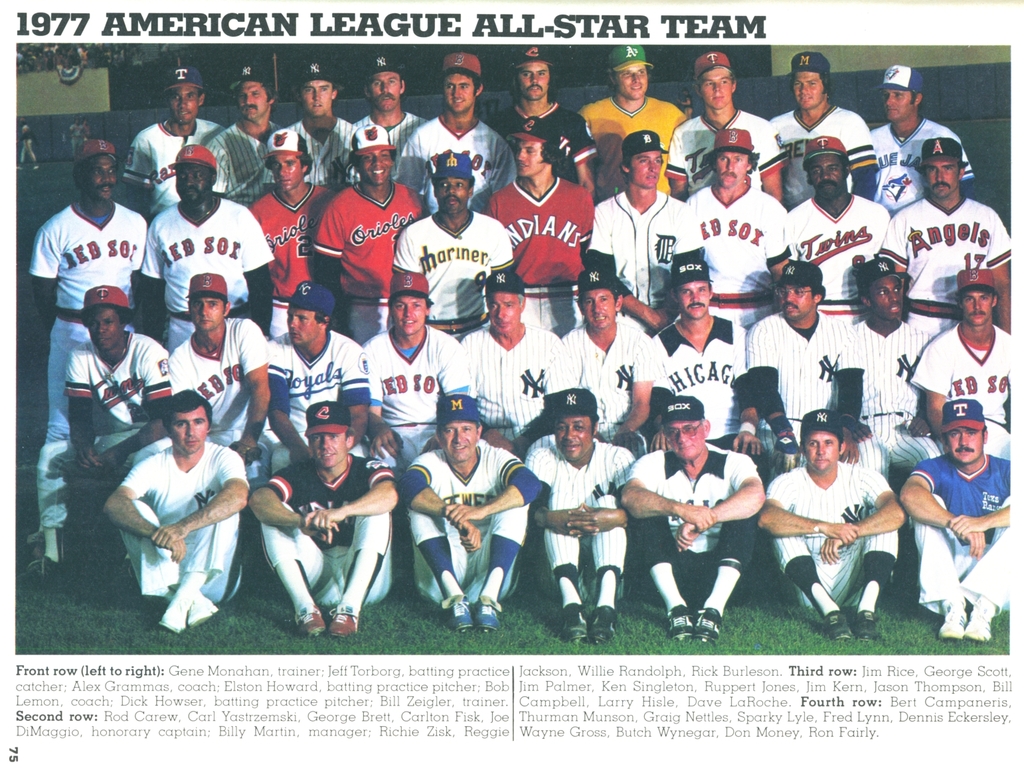
Gross started off the 1977 season clubbing 15 home runs by mid-June and being among the league leaders in home runs and RBI. He was rewarded with a selection to the American League All Star team. He cooled off somewhat in the second half, but his 22 home runs represented nearly one-fifth of the A's team total. Wayne was still learning the defensive nuances of the position and led the league with 27 errors.

The following year was a bit of a struggle at the plate as he was sent to the minors to refine his batting stroke. He began wearing glasses and his power stroke returned. In 1979, he reclaimed his  hold on the position and steadily improved in the field. He started three triple plays, tying a major league record.  By 1980, Wayne established himself as a solid major league third baseman just as the A's we're ascending back to the AL West crown.

With the 1981 West champions, Wayne slumped at the plate during the regular season, but he still played a key role in the postseason. His three-run homer in Game 1 of the ALDS against the Royals help lead the was to a win and series sweep before the Yankees defeated the A's in the ALCS.

Wayne remained the A's third baseman until Oakland traded for Carney Lansford after the 1982 season.  He moved on to Baltimore for the 1984 campaign, becoming the regular third sacker for the defending World Champions. He responded with career highs in home runs and RBI. Injuries hampered him during the 1985 season and he returned to Oakland for three games, the final ones of his 11 year career.

In retirement, he coached his son Kyle's Little League team, helping them reach the Little League World Series in 1991. Kyle would go on to play ball in the Giants minor league chain. In 1994, he appeared as a pitcher in the movie Angels in the Outfield (below), a spot recommended by old friend and teammate Carney Lansford. Today, Wayne is enjoying retirement in Danville, California.


Why I love this card

Some shots just looked major league, and Wayne Gross' card here was one of those for me. Whether it was the action shot, the A's colorful uniforms or Gross' concentration on something other than the camera, this is what a major leaguer looked like in 1980. Bonus points go toward capturing the shadows and sunlight around the third base bag giving the A's banner a a natural accent.


Something else....

Gross had a very curious 1985 season. In 103 games with the Orioles, he hit 11 home runs. Decent, if not unspectacular production. Curiously, he drove in only 18 runs despite those 11 dingers. That's 9 solo shots, and two three-run jobs. That's three RBI for the entire remainder of the season.


Monday, April 23, 2012

#341 Jim Essian


Who is this player?
Jim Essian, catcher, Oakland A's
As the 1980 season unfolded, Jim Essian was part of a baseball resurgence in Oakland. The A's surprised the critics by winning 29 more games over their disastrous 1979 campaign. Led by new manager Billy Martin, "Billyball" captivated the fans and turned the A's into winners. Essian was a part of that effort as part of a platoon system of catchers with Mike Heath and Jeff Newman. Essian started the most games behind the plate as he was the best defensive receiver. That November, Jim signed a one-million dollar contract to become the starting catcher for the Chicago White Sox in 1981.

A product of the eastside sandlots of Detroit, Jim Essian was a prep star at St. Martin of Tours. A two-sport athlete, he led his high school basketball team to the state championship in 1969 and was named an all-state player. However, when the Philadelphia Phillies offered him a contract, he began his career in baseball. Working his way up the minor league ladder, he was named to three All Star teams and established his reputation as an excellent defensive catcher. Jim made his major league debut late in the 1973 season.

In Philadelphia, his path to a full-time spot was essentially blocked by Bob Boone and he only appeared in 21 major league games over the course of three seasons. Subsequently, he was traded twice in May of 1975, first to the Atlanta Braves and then to the Chicago White Sox less than a week later. It was in Chicago that Essian settled in as backup catcher and had a strong season with the 1977 South Side Hit Men team, batting .273 in 114 games and smashing 10 home runs. The good vibes did not last long in Chi Town as the Hit Men were quickly disassembled and Essian was traded to the Oakland A's prior to the 1978 season.

With Oakland, Essian saw the fall of the A's Dynasty first hand, as Oakland fell to the cellar of the AL West. Essian even reported calling the A's front office during the off-season to find the number disconnected. There were some bright moments, such as the time Essian hit an inside-the-park grand slam against the Toronto Blue Jays.

After signing his million dollar contract, Essian was to be the starting catcher upon his return to the Chicago White Sox. However, when Carlton Fisk became an unexpectedly available free agent, the Pale Hose threw their hat into the ring and landed the prize. This transaction moved Jim to the bench and he only spent one year in Chicago before being traded again, this time to the Seattle Mariners. Jim would play three more season in Seattle, Cleveland and returning to Oakland before his 12 year career ended in 1984.

Jim became a minor league player-manager in 1985 and became a full-time manager the following year. Taking a page from the "Billyball" philosophy, Essian's teams were aggressive on the base paths and had strong pitching. He was rewarded with the Cubs' managerial position in 1991, taking over for the fired Don Zimmer. He only managed that season at the major league level before returning to the minor leagues. More recently, Essian has led the Greek National Team as their manager.

Why I love this card
During the time I was collecting these cards, I devoured every bit of information that they contained. It was earth shattering to learn that Essian resided in my home town at the time of St. Clair Shores, Michigan. To think that a major leaguer lived in my town was mind blowing. I could run into him at the 7-11! The grocery store! The little league field! The possibilities were endless. Of course, none of that happened, but to think that it realistically could personalized the game that much more.

Something else....
Absolutely love the A's logo on Essian's helmet. In those days, the catcher's gear wasn't a sophisticated as today and more often than not, players had a batting helmet turned around. To have the logo on the front (or back) was a precursor to the multiple designs on the hockey-style catching mask of today.


Thursday, August 5, 2010

#316 Bob Lacey


Who is this player?
Bob Lacey, closer, Oakland Athletics
In 1980, Bob Lacey may have been the least used closer of the modern era. While Lacey appeared in a team-high 47 games, finishing 31 he only earned six saves. This was due to Oakland's record-setting starting pitching. In what will likely never be duplicated in today's game, the A's pitched an astonishing 94 complete games in '80, leaving little left for relievers like Lacey. This eventually led to friction with his manager Billy Martin over how he was used. Martin did give Lacey his first ever starting assignment near the end of the season, and he blanked the Milwaukee Brewers. Naturally, it was a complete game.

Colorful. Flake. Eccentric. All of these words and more were used to describe Bob Lacey during his major league days. Like most pitchers with that description, Lacey was a lefthander that once struck out 19 batters during an American Legion playoff game as a youth. He was a late round draft selection of the Oakland A's in 1972, and while he was 13-2 in his first minor league season, he floundered in the minor leagues. However, as the A's dynasty began to crumble as the decade wore on, Lacey found himself given an opportunity at the major league level during the 1977 season.

In just his fourth major league appearance, he struck out future Hall of Famer Reggie Jackson twice in crucial situation, enraging Jackson and the Yankees in the process. Later, he would engage in a brawl with the Kansas City Royals' Darrell Porter, who called Lacey a "crazy, immature, punk." Despite this, he emerged as Oakland's most reliable relief pitcher and led the American League in appearances in 1978.

No other pitcher in league history inherited more baserunners than Bob Lacey did in 1978 (104). Despite that, he won eight games, crafted a 3.01 ERA and saved five games. He had a disappointing 1979 season suffering with bursitis in his heel, but then again, so did the A's as they lost 109 games. He fell out of favor with Martin and he refused to use Lacey at all during Spring Training. In fact, legend goes that Martin went so far to bar anyone from even playing catch with Lacey. Eventually he was traded to the San Diego Padres in late March. He was with the Padres for three days who in turn traded him to the Cleveland Indians.

Lacey split time between the Indians and Rangers in 1981 and pitched for Satillo in the Mexican League in 1982. He was a late-season call up for the California Angels in late-1983 and pitched in relief for the San Francisco Giants in 1984. He bounced around the minors for the 1985 season before pulling the plug on his seven-year career. He made a comeback of sorts in the late 1990s as manager of the Greensville Blusemen. Not content to just the dugout, Lacey appeared in eight games of relief over the 1998 & 1999 seasons, four games each year.

Why I love this card
What a great pose! I can't figure out exactly what Lacey is doing....pointing to a quarter on the ground? Throwing a paper airplane? Admonishing a small child? Whatever it was, it didn't fit the "traditional" pitcher pose, which I guess is typical regarding Lacey. Added bonus points to "FACE" printed across his mitt.

Something else....
One final story regarding Lacey. Apparently he gained too much weight during the 1981 Player's Strike. When asked how he would get back into playing shape, Lacey replied that his plan would be to drive his car with the windows rolled up and heat turned on full blast. With the August heat, Lacey rationalized, he would have a sauna on wheels.

On this date in 1980
Montreal Expos manager Dick Williams wins his 1,000th career game, 11 - 5 over the Mets, at Olympic Stadium. He is 3rd in wins among active managers behind Gene Mauch and Earl Weaver. The Expos overcome the offense of Doug Flynn, who ties the modern major-league record with three triples.

Wednesday, June 16, 2010

#301 Mike Edwards


Who is this player?
Mike Edwards, second baseman, Oakland A's
The year began curiously for the A's Mike Edwards; he went to salary arbitration with the notorious owner Charlie Finley. Edwards likely became the only player in history to ask for less than what any owner offered, $50,000 to Finley's offer of $58,000. Of course, Edwards was not aware of the offer, and signed on to what would be his fourth and final major league season. New skipper Billy Martin used Edwards sparingly and he batted .237. He was not offered a contract at the end of the season and he did not catch on with another major league club.

Mike Edwards was from a baseball family. Two of his brothers made the major leagues as well. Younger brother Dave has a card featured in this set and played the most seasons in the majors (1978-1982). Mike's twin, Marshall, saw postseason action with the 1982 AL Champion Milwaukee Brewers. Mike and Marshall are part of baseball history; only nine sets of twins have both advanced to the major leagues.

The Los Angeles, California native was the first in his family to reach the bigs after a successful minor league career. Drafted by the Pittsburgh Pirates in 1974, he led the New York-Penn League in games played, at-bats and triples while playing for Niagara Falls and later led the International League (AAA) in hits and stolen bases. Edwards also showed his talents in the field, leading the IL in double plays and total chances. He appeared in a handful of games for the Pirates in 1977, but his big break came when he was traded to the Oakland A's in April, 1978.

He made an immediate impact, setting a club record with a 17-game hitting streak and scoring five runs in a game. The defining moment of his career came on August 10, 1978 when he tied the major league record for unassisted double plays by a second baseman. Mike pulled the trick twice against the California Angels. On the other side, he also established a major league record for most time caught stealing by a rookie (21).

His production fell off precipitously in 1979 as his average fell by 40 points and he stole 17 fewer bases. However, that is tempered by the fact that the A's of 1979 were one of the worst teams of the modern era and in a constant state of flux. When he lost his job in 1980, he rebounded and played in Japan in the early 1980s. Any information on his current whereabouts would be most appreciated.

Why I love this card
What a great action shot! I can hear my Little League coach now, "Two hands! Two hands!" By far, the A's lead this set with the best live game photography. Interestingly, the standouts have been of their middle infielders, first Mario Guerrero, then Rob Picciolo, now Edwards. Even if you didn't know who Edwards was or even care about the A's, if this card showed up in your pack, you were guaranteed to spend some of your summer afternoon gazing it over.

Something else....
Here is Edwards' 1979 Record Breaker card:


I ended up getting this card probably in the mid-1980s sometime and wondered what happened to Mike. After all, he set a record, didn't he? My mind couldn't comprehend the 'here today, gone tomorrow' turnover in major league baseball. I'm still wondering what happened to Mike Edwards.

On this date in 1980:
The Blues Brothers debuts on this date in Chicago. I was not fortunate to see this in theatres the first time through, but have seen it a hundred times since. I don't get tired of it (I know, I'm sick) and am glad that this movie introduced me to artists like Ray Charles, John Lee Hooker and Cab Calloway. Shame, a boy that young goin' bad.....

Monday, May 24, 2010

#284 Larry Murray


Who is this player?
Larry Murray, outfielder, Oakland A's
While not known at the time, the six-year major league career of Larry Murray was already at an end. In Spring Training Larry was designated for assignment and spent the season with the Triple-A Ogden A's. Murray appeared in only 13 games that season batting only .233 with one home run and three RBI.

A phenominal three-sport athlete at Phillips High School in Chicago, Murray chose baseball after a high school career in which he broke and established numerous records as a standout running back/defensive back. He was taken in the 5th round of the 1971 draft by the New York Yankees, and spent the next six seasons in the minor leagues. Murray displayed impressive speed and a strong throwing arm, but his hitting was suspect. He failed to bat over .300 during that span in the bushes, but did earn three brief looks by the Yankees during 1974-76. He played in a handful of games each year and managed only four hits.

Nicknamed "Slick," Murray had his finest minor league season in 1976, leading the Eastern League in runs and being named an All-Star. He was assigned to Triple-A Syracuse in 1977 before he was involved in a multi-player deal with the Oakland A's. The trade would be the biggest break in Murray's career. As the A's fell from the perch of perennial contender in the wake of free agency, Murray earned regular playing time. He appeared in 90 games with the 1977 A's, but only batted .179.

Murray spent most of the 1978 season in the minors, but returned to the A's in 1979. He began the year as Oakland's right fielder, but eventually lost the job to Tony Armas. He also saw his playing time diminish thanks to a talented rookie named Rickey Henderson. Larry struggled at the plate all summer, finishing the year batting .186. Even his greatest asset, his speed faltered as he was cuaght 50% of the time. He attempted a comeback with the A's in Spring Training 1981 but was cut and his career was formally over.

Currently, Larry lives in California and was quoted in the Chicago Defender recently upon the passing of his high school coach, Carl Bonner. During his 42-year career as a coach/physical education teacher at Wendell Phillips High School, Bonner became one of the winningest coaches in Illinois history, winning more than 200 games. He also played a pivotal role in sending thousands of underprivileged student-athletes to college and beyond. Said Murray:
“He was one of the greatest men I knew. He helped shape us into who we turned out to be as men. It wasn't just football. He was like our father when our fathers weren’t there. We were a gang-infested school back then.”


Why I love this card
The minor league records occassionally listed on the back would always interest me. I would always ask my Dad where certain cities were when it wasn't obvious. I had an atlas and would look first. It may not have been Murray's card, but I do recall almost stumping him on Oneonta. I sat on the porch while he finished cutting the front lawn. When he was done he just looked at me and said "New York." Back to the drawing board....

Something else....
Murray finished his career with 20 stolen bases in 30 attempts. His 20 steals were the most by a post-Deadball Era player with a career average under .200. Murray is also featured in the recent book "Mendoza's Heroes" by Al Pepper.

On this date in 1980:
The New York Islanders defeated the Philadelphia Flyers in overtime of Game 6 of the Stanley Cup finals. It was the first Cup win for the Isles who would go on to create a dynasty and win four in a row. The game winner can be viewed here.

Tuesday, March 23, 2010

#261 Dave Chalk


Who is this player?
Dave Chalk, utility, Oakland Athletics
Shortly before the 1980 season was to begin, Dave Chalk signed a free agent contract to become a member of the Kansas City Royals. The righthanded hitting Chalk appeared in 69 games, primarily at third base when George Brett was injured. He also proved to be a useful defensive replacement and reliable in the clutch. His only home run of the year came in a tense game against the Red Sox where Chalk went 3 for 4 with two RBI as the Royals won 9-8. He appeared in the postseason for the only time in his career that fall, in Game 2 of the World Series as Brett was famously suffering his case of hemorrhoids.

A two-time American League All-Star with the California Angels, Dave Chalk was a versatile infielder throughout his major league career. He was originally a third baseman at the University of Texas, where he once hit four home runs in a double header. Selected in the first round by the Angels in 1972, Chalk was moved to second base in the minor league before finally making the Angels as a full-time shortstop in 1974.

An excellent bunter and contact hitter, Chalk excelled in clutch situations. He was moved to third base during his second full season (1975) and for a time was considered one of the better third sackers in the American League. While he never possessed great power, Chalk was known as a reliable fielder and a professional teammate. In 1976, Dave was the last player to have more than 500 plate appearances without a home run nor a stolen base.

A freak injury put him on the disabled list in 1978, and as the Angels began to dip into the free agent market, Chalk was expendable. He was traded to the Rangers for Bert Campaneris in 1979, but spent only six weeks there before being shipped to Oakland for the remainder of the season. Injuries cut into his 1979 season and he was not offered a contract by Oakland. Chalk spent two seasons in Kansas City (1980-81) before ending his nine year major league career.

In retirement, Chalk was honored by the University of Texas by being inducted into the Longhorn Hall of Honor. Today, Chalk's daughter is a senior on the Texas Longhorn softball team.

Why I love this card
Remember these in school when we were kids?

A kid I went to school with, Dave Durecki, had a habit of writing his name everywhere and on everything. He always got in trouble but he still did it. Invariably, this was not uncommon:

Kind of self-explanatory.

Something else....
Chalk had one of those stances that was fun to imitate. Check out his pose on the 1980 card. For a guy known for his bunting ability, is there a better way to photograph him than this? It looks exactly the same way my Dad would hold a rake. Great job Topps.

On this date in 1980:
Archbishop Óscar Romero of El Salvador gives his famous speech appealing to men of the El Salvadoran armed forces to stop killing the Salvadorans. This speech would lead to his assassination while celebrating Mass the following day. He is currently in the process to be canonized as a saint.

Sunday, January 10, 2010

#231 Steve McCatty


Who is this player?
Steve McCatty, starting pitcher, Oakland Athletics
In his second full season in the major leagues, Steve McCatty was one of the fabled "Five Aces" that led the Oakland A's into contention in 1980. With the notorious Billy Martin as their manager, McCatty teamed with Mike Norris, Rick Langford, Matt Keough and Brian Kingman to form a starting rotation that was the envy of every team in the game. The A's finished in second place and the righthanded McCatty contributed 14 victories, eight in the second half to keep the A's in contention.

A native of Troy, Michigan, McCatty signed with the A's as an amatuer free agent in 1973. He spent several years in the minor leagues pitching as both a starter and a reliever with brief looks at the major league level in both 1977 and 1978. As the A's decended into the cellar of the AL West, McCatty was given an opportunity that he took full advantage of in 1979. He earned a spot on the pitching staff in in May and began his season 4-0. The hard-throwing McCatty won 11 games for a team that won only 54, pitching eight complete games and leading the team in ERA.

McCatty notched his best season in 1981. As the A's cruised to a playoff spot, Steve led the American League in victories and shutouts. His 2.33 ERA was third in the league and he finished second in the Cy Young Award voting. He pitched a complete game victory in Game 2 of the AL West playoffs against the Royals, but McCatty and the Yankees did not fare as well in the ALCS, losing to the Yankees in three games.

Known as a practical joker, McCatty once set Martin's shoelaces on fire at the moment the manager was giving the sign for one of his celebrated Billy Ball suicide squeezes. But the fun was over for McCatty in 1982 as he began to suffer arm problems. Not wanting to lose his spot in the rotation, McCatty pitched through the pain, which turned out to be a knot in his rotator cuff. He did not have surgery and slowly worked his way back into the A's starting rotation by 1984. Injuries persisted and his ninth and final season in the majors was 1985. He signed a minor league contract with the Chicago White Sox and pitched in the minors for two years (1986-87) before finally retiring.

Today, McCatty is the pitching coach for the Washington Nationals, a position that he assumed in June of 2009. He had previously spent several years coaching in the minor leagues and most recently at the major league level with the Detroit Tigers in 2002. Still residing in his native Michigan, McCatty also spends the offseason as a private pitching instructor with Jason Thompson Baseball.

Why I love this card
I had mentioned previously that there are several cards in the 1980 set that remind me of the day that my Grandpa died. Sorry for the downer, but McCatty one that I distinctively remember pulling from a pack that day. Even now, whenever I see or hear about McCatty I think of Grandpa.

Something else....
From Wikipedia: During in a 1982 exhibition game against the San Diego Padres, McCatty steped to the plate wielding a toy 15-inch bat but was refused by umpire Jim Quick to hit. McCatty was instructed by A's manager Billy Martin to use the toy bat as a protest, who was furious that the DH rule was not allowed in National League ballparks.

On this date in 1980:
After six seasons on NBC, the final episode of "The Rockford Files" aired. While still a ratings success, the show was cancelled due to the health concerns of star James Garner, who was suffering from bad knees and back as well as an ulcer.

Tuesday, October 27, 2009

#177 Dave Heaverlo


Who is this player?
Dave Heaverlo, relief pitcher, Oakland A's
The A's sold the righthanded Heaverlo to the Seattle Mariners on Opening Day 1980. He arrived to the Kingdome in the fifth inning, entered the game in the eighth and earned the save. Despite being one of Oakland's better pitchers, he was shipped out primarily due to his outspoken nature as the A's player representative. He complained about the A's front office and travel schedule and he returned to his native Washington as the Mariners setup man. He set the Seattle club record (since broken) for appearances in 1980 with 60.

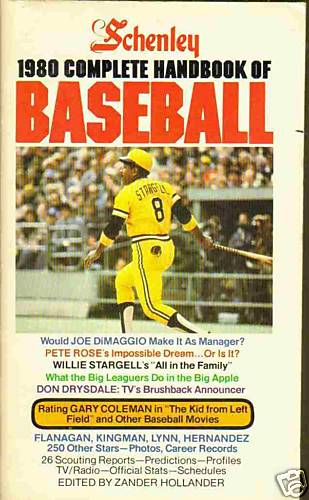
Beyond the statistics, Dave Heaverlo's career is marked by words like "colorful" and "jokester." He was one of the first players ever to shave his head, unheard of a generation ago. You can see that slightly here and here. He also kept the number 60 that he recevied as a non-roster rookie throughout his major league career. According to Heaverlo's profile, the 1980 Complete Handbook of Baseball said:
Grew weary of listening to "funeral home music" on Oakland Coliseum public address system so he took matters into his own hands and changed the station on a transistor radio he found sitting, unattended, in front of the open microphone."

However, Heaverlo was an outstanding athlete. A prodcut of Central Washington University, he was a first round draft pick of the San Francisco Giants in the 1973 amatuer draft and as a professional was used exclusively as a relief pitcher. His outstanding performance in the minors earned a quick ticket to the major leagues and he made his debut in 1975. He became a fixture in the Giants bullpen for three seasons, averaging 53 appearances a season and compling a 3.11 ERA. He was one of the key players in a multi-player package the Giants sent to Oakland for Vida Blue.

In Oakland, Heaverlo assumed the role of closer on a truly terrible A's team that lost 201 games in two seasons. He unfairly garned a reputation of being unable to hold a lead, but appeared in 60+ games in both years and having one of the best ERAs on the team. In Seattle he cemented his reputation as a clubhouse comic with a series of wigs and ghoulish masks. However, he was released during Spring Training in 1981, primarily due to a personality conflict with manager Maury Wills. He signed on with the A's again, but lasted only six games in the final season of his 7-year big league career.

Away from the game, Heaverlo has stayed in his native Washington as a radio show host and color commentator for Central Washington Football. He also serves as pitching coach for the Big Bend Vikings in Moses Lake, Washington.

Why I like this card
I have mentioned the 1980 Complete Handbook of Baseball in other posts. This book provided a perfect compliment offering a bit more substance to these players. The entry above about Heaverlo makes me laugh as much now as it did then. It was how I recognized Heaverlo when I finally got this card late in the year. Can you imagine a major league team today with a microphone up to a transistor radio? Great stuff. A little disappointed that his head isn't shaved in the photo, though.

Something else....
Here's how truly terrible the A's were in the final days of Charlie Finley. When he traded his last marketable star, Vida Blue, he received seven players in return from the Giants. By the time these cards were out a little more than three years later, none of them were still with the A's. Granted, none of them became superstars, but not even one of them stuck? Sheesh. And with that, all of the players in the Vida Blue trade have now been featured. It will not be mentioned again. Really.

Sunday, October 4, 2009

#158 Rob Picciolo


Who is this player?
Rob Picciolo, infielder, Oakland A's
With the arrival of Billy Martin in 1980, Rob Picciolo lost his starting shortstop position in favor of Mario Guerrero. Picciolo was the Opening Day second baseman for the A's and when Guerrero slumped, he reclaimed his starting position. Normally a light hitter with a reputation for not drawing walks, the righthand hitting Picciolo batted .240 in 1980 and walked only twice in 281 plate appearances. He hit five home runs that year, with three of them coming in September.

Rob Picciolo was the 4th overall pick in the secondary phase of the 1974 draft out of Pepperdine University. After two years in the minors, Rob made a quick entrance to the majors when he earned the shortstop position in 1977, taking over for popular veteran Bert Campaneris. He appeared in 148 games during his rookie season, and hit a meager .200. When Guerrero joined the club in 1978, he was relegated to utility status and regained the position again in 1979. That year, the A's were one of the worst teams in modern history, losing 108 games. Picciolo walked only three times in 115 games, one of them intentionally.

Again the primary shortstop for the 1981 AL West champions, he had his best offensive season, batting .268. He batted .250 in during the postseason, but the A's fell to the New York Yankees in the ALCS. He was traded to the Milwaukee Brewers in May of 1982 and appeared in only 36 games over the next two seasons. He served primarily as understudy to Robin Yount during his two years in Milwaukee and was on the roster of the 1982 American League Champions. Picciolo did not appear in the postseason.

Rob was released in 1984 and caught on with the California Angels. He appeared in 87 games, primarily as a defensive replacement and batted only .202. The Angels did not resign him for 1985, but he returned to Oakland for his ninth and final season. Again primarily a utility player, Rob batted .275 in 71 games. In 1,720 plate appearances, Picciolo walked only 25 times, becoming one of the hardest players in major league history to walk.

He was not out of baseball long as he was named manager of the Single-A Spokane Indians in 1986 & 1987. That earned him a promotion to the big-league level as Padres coach in 1990. That began a 16-year tenure as the longest serving coach in Padres history. Today, he works as an instructor in the Los Angeles Angels' chain.

Why I love this card
Like the Mario Guerrero card, this was one of my favorites in the 1980 set. This in-game action shot of Picciolo in his green and gold glory is a memorable card for me. As a double printed card, I also have seven Picciolo cards so that's another reason why its probably so memorable.

Something else....
Time to update the scorecards. We are currently up to 14 of the 66 total DP cards and I cannot see a rhyme nor reason as to why certain players are chosen. Some players like Willie Wilson and Fred Lynn are stars, while Picciolo was not. I can't detect anything numerically either as to why certain cards are chosen. Again, if anyone would like to pass along information, please let us know.

Thursday, September 3, 2009

#134 Matt Keough


Who is this player?
Matt Keough, starting pitcher, Oakland A's
Before he married a Playmate, before his family appeared on a reality TV Show and before his mugshot appeared on TMZ, Matt Keough was a 24-year old righthanded pitcher that had come into his own in 1980. His 2.91 ERA was fourth best in the league and he pitched an incredible 20 complete games. He settled in as the #3 starter on a revived Oakland club that surprised all of baseball with a second place finish in the AL West. Keough was named Comeback Player of the Year and he and the other young pitchers on the A's were rapidly becoming the envy of the league as 1980 drew to a close.

The son of former big leaguer Marty Keough, Matt was drafted by the A's out of Corona del Mar High School in 1973 as an infielder. He was converted into a pitcher after the 1976 season and made his major league debut less than a year later. He was an All-Star selection in his first full season in the majors (1978) when he was among the league leaders in ERA for much of the first half. While he struggled a bit in the second half, he still finished the year with a respectable 3.24 ERA on an Oakland team that lost 93 ballgames.

The following year, the A's were dreadful, losing 108 games. Keough was particularly effected, tying a major league record by losing his first 14 decisions and finishing the year 2-17. His winning percentage of .105 was the worst recorded by a pitcher since 1916. Keough and the A's enjoyed a resurgence after Billy Martin was hired as manager in 1980. Keough won his first five starts for the 1981 Athletics and appeared on the cover of Sports Illustrated. He began to feel pain in his shoulder in May, and pitched through the pain during a memorable year for the A's as they won the AL West. The A's, however, were swept by the New York Yankees.

The injury caught up with Keough in 1982 and he put up a 5.72 ERA. He walked more batters than he struck out and he led the league in home runs allowed, earned runs allowed, and losses. The following year, he was traded to the New York Yankees but continued to struggle. He voluntarily accepted a minor league demotion in 1984, but was released after the season. He signed with the Cardinals but only made five appearances in 1985 and split the 1986 season, his ninth and final, between the Chicago Cubs and Houston. He was never able to fully overcome the injuries that plagued his career.

Keough spent four years with the Hanshin Tigers and attempted a comeback in 1992 with the California Angels. While sitting in the dugout during a spring training game he was hit in the right temple by a foul ball. The blow caused a life-threatening blood clot, which required surgery and ended his major league aspirations. His personal life of late has been featured on Bravo's "The Real Housewives of Orange County" and his struggles with alcoholism has been tabloid fodder, culminating in jail time in 2008. Currently he is a special assistant to A's General Manager Billy Beane.

Why I love this card
I like a couple of things here. First, I like how the G and H in Keough's last name seem to be seeping off the back of his jersey and down his arm. Second, Keough is all alone at the Oakland Coliseum in this photo. With the outfield clearly in the background, who is he pitching to? He's obviously not on the mound, not even in the bullpen. Did he refuse to be positioned differently? Ah, the wonders...

Something else....
Like 1980 Topps cards, I have fond memories of the early days of MTV, specifically ZZ Top videos. Not because of the music mind you, but the videos. I had no idea that one of the girls in "Legs" was Keough's wife. She's the one in the white outfit and black hat.

Sunday, July 26, 2009

#96 Jim Marshall Oakland A's Team Card


What is this card?
Team card, Oakland A's, Jim Marshall Mananger

The team pictured here, the 1979 Oakland A's had just completed one of the worst seasons in major league history. They had lost 108 games, were almost relocated to New Orleans, and drew a meager 306,763 the entire season. Even more amazing, they drew only 653 for one early-April game. Their owner, Charlie Finley, was one of the most disliked men in sports at the time. Marshall was a former manager of the Chicago Cubs that was hired shortly before the 1979 season began.

During the winter of 1979-80, rumors were still rampant that the A's would move, this time to Denver. In an effort to give his club value, Finley hired Billy Martin as manager. Martin, along with a core of young players, turned things around in Oakland almost immediately. There style of play was deemed "Billyball." A good video of the A's during this era can be seen here.

Led by a group of young pitchers and a future Hall of Famer Rickey Henderson, the A's roared out of the gate in 1980, winning seven in a row in April. They finished the month in first place and only 2.5 back as June began. However, a summer swoon and a weak hitting infield returned the A's to the middle of the pack. Nevertheless, the A's finished with a winning record and the groundwork was there for Oakland to build on. Finley meanwhile, sold the team in August, 1980.

Henderson, in only his second season, set the American League record for stolen bases in a season (100), breaking a record set by Ty Cobb 65 years previously. It would be foreshadowing of what was to come in Rickey's career. Teamed with the slick-fielding Dwayne Murphy and the power-hitting Tony Armas, the A's suddenly had one of the best outfields in baseball. Murphy had won his first of six Gold Gloves in 1980 and Armas led the team with 35 home runs and 109 RBI.

Mike Norris led the pitchers with an outstanding 22-9 season. He would finish second in the Cy Young voting and also won a Gold Glove. He was supported by the durable Rick Langford, who won 19 games and completed 22 starts in row. Matt Keough was the #3 starter, and he also won 16 games with a 2.92 ERA and 20 complete games. The A's rotation was so reliable that their bullpen only recorded 13 saves the entire year.

Why I love this card
I love team photos. There are very few historical records of the bad teams in baseball history and this card is a reminder of that 1979 team. I also like the alternating yellow and green jerseys the players wore, it adds a bit of liveliness to an otherwise mundane team. Also, fortuitous timing that Rickey Henderson's first team would be featured on the day he gets inducted into the Hall of Fame.

Something else....
It truly is amazing what the 1980 A's accomplished. If you take their outfield and starting rotation out of the mix, the rest of the team contributed very little to the overall team effort. Billy Martin is renowned for his managerial abilities (albeit short term) and nowhere is that more evident than with the 1980 A's. To wit, 94 complete games. Think about that. 94. In the age of pitch counts and setup men, we will never see that again. Not even close.

Saturday, July 18, 2009

#86 Dave Hamilton


Who is this player?
Dave Hamilton, relief pitcher, Oakland A's
A member of the A's "Mustache Gang" of the early-1970s, Hamilton had returned to Oakland in 1979, primarily as a lefthanded relief pitcher. His 3.70 ERA in '79 was the best on the club, a full run under the team's average. However, the A's had lost 108 games that season and there were rumors of a move to Denver. It was expected that Hamilton would fill a similar role in 1980 but injuries and ineffectiveness led to the worst season of his career. After the season, he did not appear in another major league game ending a nine-year career.

When Hamilton broke into the majors in 1972, it was a much different story in Oakland as the A's were beginning their reign as kings of the baseball world. In the early part of 1972, the A's starting rotation was in disarray as Vida Blue was holding out and veteran Denny McLain was not pitching well. Hamilton was inserted into the rotation and he promptly won five of his first six decisions. While he didn't maintain that level of success, he helped lead the A's to their first World Championship, pitching in the ALCS and the World Series. It was the A's first title since the club moved to Oakland.

Hamilton was the fifth starter on the A's in 1973 winning six games in 11 starts. He moved up to the fourth starter in 1974, winning seven in 18 starts. While he was on the playoff and World Series roster both seasons, he did not appear in the postseason. However, when the A's lost Catfish Hunter following their third championship, Hamilton's career was indirectly effected.

Desperate for veteran pitching, in 1975, A's owner Charlie Finley traded Hamilton and prospect Chet Lemon to the Chicago White Sox for Stan Bahnsen. The following season, he pitched out of the bullpen as the Sox' closer as Chicago experimented with Goose Gossage in the starting rotation. He was effective as a setup man for the 1977 "South Side Hitmen" one of the more popular teams in White Sox history, but as that team was dismantled in the dawning days of free agency, Hamilton was shown the door as well, traded to the Cardinals. He split the 1978 season between St. Louis and Pittsburgh before returning to Oakland as a free agent in 1979.

In retirement, Hamilton still continued to play the game and shared his knowledge as coach for many years at California High School in San Ramon, California.

Why I love this card
Not until I researched this card did I even realize that Hamilton earned three rings with the "Swingin' A's" and was with them through their glory years. I guess that the 1980 set is still teaching me something new 29 years later.

Something else.....
The A's farm system of the late 1960's and early 1970's produced many major leaguers among them Hamilton. In fact, on Hamilton's first professional team the 1966 Lewiston Broncs, he was teammates with another player on his first professional team, Reggie Jackson. This is also Hamilton's final baseball card of his career.

Friday, May 29, 2009

#49 Mario Guerrero


Who was this player?
Mario Guerrero, infielder, Oakland A’s
The diminutive right-handed hitting Guerrero had lost his starting position in 1979, primarily due to a mid-season benching. New A’s manager Billy Martin was hired in Spring Training 1980 and he made Guerrero his primary shortstop, sometimes sharing time with Rob Piccolo. Guerrero would appear in 116 games and achieved career highs in runs scored and stolen bases.

Signed as a free agent by the Yankees in 1968, Guerrero was the player named later in the trade to Boston that sent relief ace Sparky Lyle to the Big Apple. He served primarily as a utility player in 1973, but won the Red Sox shortstop position from future Hall of Famer Luis Aparicio in the spring of 1974. Mario promptly lost the job to minor league teammate Rick Burleson at midseason and he returned to the bench. The progress of Burleson along with a spring holdout (the first by a Sox in 18 years) prompted Guerrero’s early Boston departure. He was traded to the St. Louis Cardinals in April 1975.

Guerrero played sparingly in St. Louis and he was traded again, this time to the California Angels in May 1976. It was in Anaheim that he achieved career highs in batting, hitting .284 and .283 in 1976 and 1977 respectively. However, he never received an opportunity to play on a daily basis and he signed with the San Francisco Giants as a free agent in December 1977. Surprisingly, Guerrero was then traded to Oakland in a package that made Vida Blue a Giant.

In Oakland, Guerrero became a starter, and helped Oakland off to a fast start in 1978. While the A’s faltered and finished 6th, Guerrero batted .275 and achieved career highs in nearly every offensive category. After the 1980 season, he was traded to the Seattle Mariners, but he was released in Spring Training 1981, ending his eight-year career.

Why I love this card
Kiko Garcia's reign as "best action shot" of the 1980 set has come to an end, with Guerrero completely in the air for this shot. I was always curious to the identity of the sliding Detroit Tiger in this shot and in 1980, it was the subject to much conjecture. I always thought it was Eddy Putman, my dad suggested either Mark Wagner or Champ Summers. Through the miracle of the internet, 29 years later, dad was right, it was Wagner. Here's the box from the likely 1979 game.

Something else....
In retirement, Guerrero developed a reputation in the Dominican Republic. Raul Mondesi had to sit out part of the 2004 season due to a court battle with Guerrero and he won a similar settlement against Geronimo Berroa. This brought Guerrero criticism from other Dominican-born players, because he sued these players for 1% of their career earnings in exchange for advancing their careers. A detailed article can be found here.

Wednesday, May 13, 2009

#34 Jeff Newman


Who is this player?
Jeff Newman, catcher, Oakland A’s
Newman was the starting catcher for the A’s and their lone All Star representative in 1979. During the off-season, there was speculation that the A’s would move to Denver, talk that ended once Billy Martin was named manager. Newman was slated to be catcher, but would also play first base and outfield.

After six seasons in the minors, Jeff Newman was ready to give up the game until the Oakland A’s purchased his contract from the Cleveland Indians. He almost immediately made his major league debut the next season for an A’s team that would finish the year in 2nd place after five straight AL West titles.

The decline of the A’s dynasty corresponded with Newman’s increase in playing time. Since becoming a semi-regular player in 1977, the A’s lost at least 90 games the next three seasons, topping out at 110 losses in Newman’s 1979 All Star season. The A’s rebounded in 1980 under new manager Martin and finished in second place. Newman split time between first base and behind the plate.

The A’s won the AL West in 1981 and played the Yankees in the League Championship Series, a season that saw Newman’s power numbers drop drastically. He failed to get a hit in nine post-season at bats and the A’s lost the ALCS in three straight games. After struggling to hit .200 in 1982, the A’s traded Newman (along with Tony Armas) to the Boston Red Sox for the 1983 season. He assumed a substitute role in Boston and after nine seasons in the majors, retired after the 1984 campaign.

After his playing career, Newman was a coach on the 1986 A’s and was the interim manager before the A’s hired Tony LaRussa. Newman was the Indians third base coach from 1992-99, and served as the Orioles bench coach in 2000. Newman spent 2005 as third base coach for the Mariners.

Why I love this card
If there was ever to be a card to feature an All Star catcher, this is it. Newman is sporting the half helmet and old school mask. Two for two on the team name pennant being the correct colors as it blends perfectly with Newman’s road uni.

Something else....
Newman’s card is also the third of the 66 double printed cards in the 1980 set. That’s three of these in the first 34 cards.